How Face 3D Scanning Helps Beauty Professionals Improve Client Satisfaction
In the rapidly evolving medical aesthetics and facial restoration industry, client expectations for personalization, precision, and treatment safety are higher than ever. Traditional facial assessment methods often rely on manual measurements and visual estimation, which can lead to inconsistencies and communication gaps.

Face 3D scanning technology is transforming how beauty professionals, aesthetic clinics, and facial rehabilitation specialists deliver customized treatment experiences. By capturing highly accurate facial data, clinics can improve consultation quality, treatment planning, and overall client satisfaction.
What Is Face 3D Scanning?
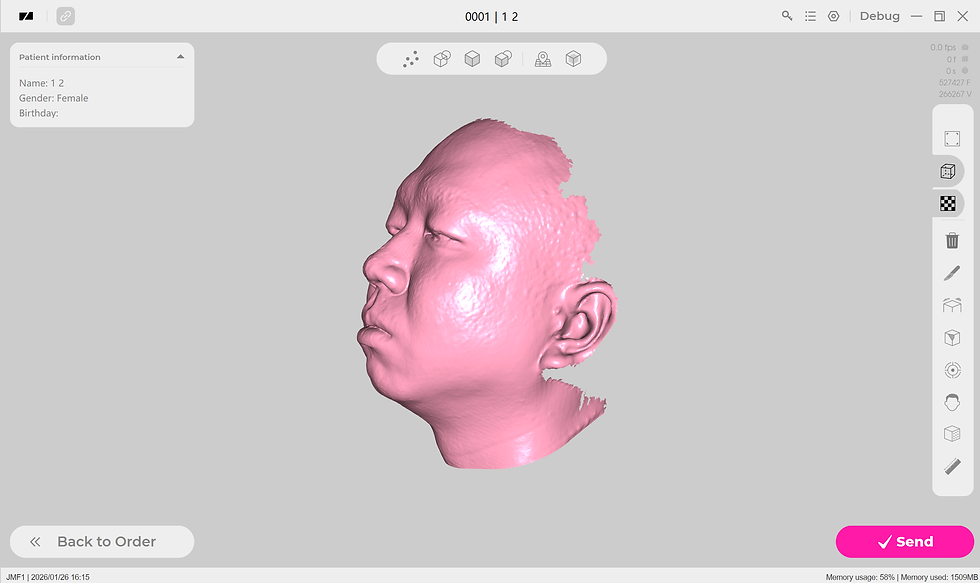
Face 3D scanning is a digital imaging technology that captures the full geometry and contour of a client’s face in three dimensions.
Unlike traditional photography, 3D facial scanning records:
Facial symmetry
Skin contour and depth
Facial proportions
Volume distribution
Surface structure details
For medical aesthetics and facial reconstruction professionals, this technology provides a more objective and data-driven foundation for treatment planning.
Why Client Satisfaction Matters in Aesthetic and Facial Restoration Clinics
In cosmetic and facial rehabilitation services, patient satisfaction directly impacts:
Clinic reputation
Client retention
Referral rates
Treatment acceptance
Brand trust
Clients increasingly expect visualized treatment communication and predictable outcomes before committing to procedures.
This is where Face 3D scanning creates significant value.
How Face 3D Scanning Improves Client Satisfaction

1. More Accurate Facial Analysis
Traditional consultation methods can be subjective and inconsistent.
With Face 3D scanning, professionals can precisely analyze:
Facial asymmetry
Jawline contour
Nose structure
Skin surface irregularities
Volume loss
This enables more personalized treatment recommendations and improves clinical confidence.
2. Better Client Communication
Many clients struggle to fully understand treatment plans through verbal explanations alone.
3D facial visualization allows professionals to clearly demonstrate:
Current facial conditions
Treatment areas
Potential improvements
Before-and-after comparisons
Visual communication improves trust and reduces misunderstandings during consultations.
3. Improved Treatment Precision
Face 3D scanning provides highly detailed digital facial models that support precise treatment planning for:
Facial fillers
Botox procedures
Orthognathic assessment
Facial prosthetics
Scar rehabilitation
Reconstructive treatments
Greater precision often leads to more natural-looking outcomes and higher patient satisfaction.
4. Enhanced Personalization
Every face is unique.
Face 3D scanning helps beauty professionals create highly customized solutions based on each client’s facial anatomy instead of relying on standardized templates.
This is particularly valuable in:
Facial symmetry correction
Personalized aesthetic design
Maxillofacial rehabilitation
Post-trauma facial restoration
5. Increased Professional Image and Trust
Advanced digital technology enhances the professional image of clinics and medical institutions.
Clients are more likely to trust clinics that use modern diagnostic tools and digital workflow systems.
For aesthetic clinics, adopting Face 3D scanning technology also demonstrates innovation and commitment to treatment accuracy.
Applications of Face 3D Scanning in Medical Aesthetics
Facial Aesthetic Design
3D scanning helps clinics design more balanced and natural facial enhancement plans.
Facial Reconstruction
For patients recovering from trauma, surgery, or congenital conditions, accurate facial data supports more precise rehabilitation planning.
Skin and Aging Assessment
Clinics can track facial changes over time and provide more objective anti-aging evaluations.
Custom Prosthetics and Devices
3D facial data improves the design accuracy of facial prosthetics and wearable medical devices.
Challenges Solved by Face 3D Scanning
Challenge 1: Inconsistent Consultation Results
Solution: Digital facial analysis standardizes evaluation processes.
Challenge 2: Miscommunication With Clients
Solution: 3D visualization improves understanding and treatment acceptance.
Challenge 3: Limited Treatment Personalization
Solution: Accurate facial data enables individualized treatment planning.
Challenge 4: Difficulty Tracking Treatment Progress
Solution: Digital facial records allow before-and-after comparisons over time.
Future of Face 3D Scanning in Aesthetic Medicine
As digital healthcare and AI-assisted treatment planning continue to grow, Face 3D scanning is expected to become a standard tool in:
Medical aesthetics
Plastic surgery
Facial rehabilitation
Orthodontics
Maxillofacial surgery
Clinics that adopt digital workflows early may gain stronger competitive advantages and improve long-term patient satisfaction.

Face 3D scanning is reshaping the future of aesthetic medicine and facial restoration.
For beauty professionals, medical aesthetic clinics, and facial rehabilitation specialists, this technology improves treatment precision, strengthens client communication, and enhances overall patient satisfaction.
By integrating advanced Face 3D scanning into clinical workflows, professionals can deliver more personalized, predictable, and trusted treatment experiences.