Ear Impression Style Explained: Solve Common Fitting and Comfort Challenges
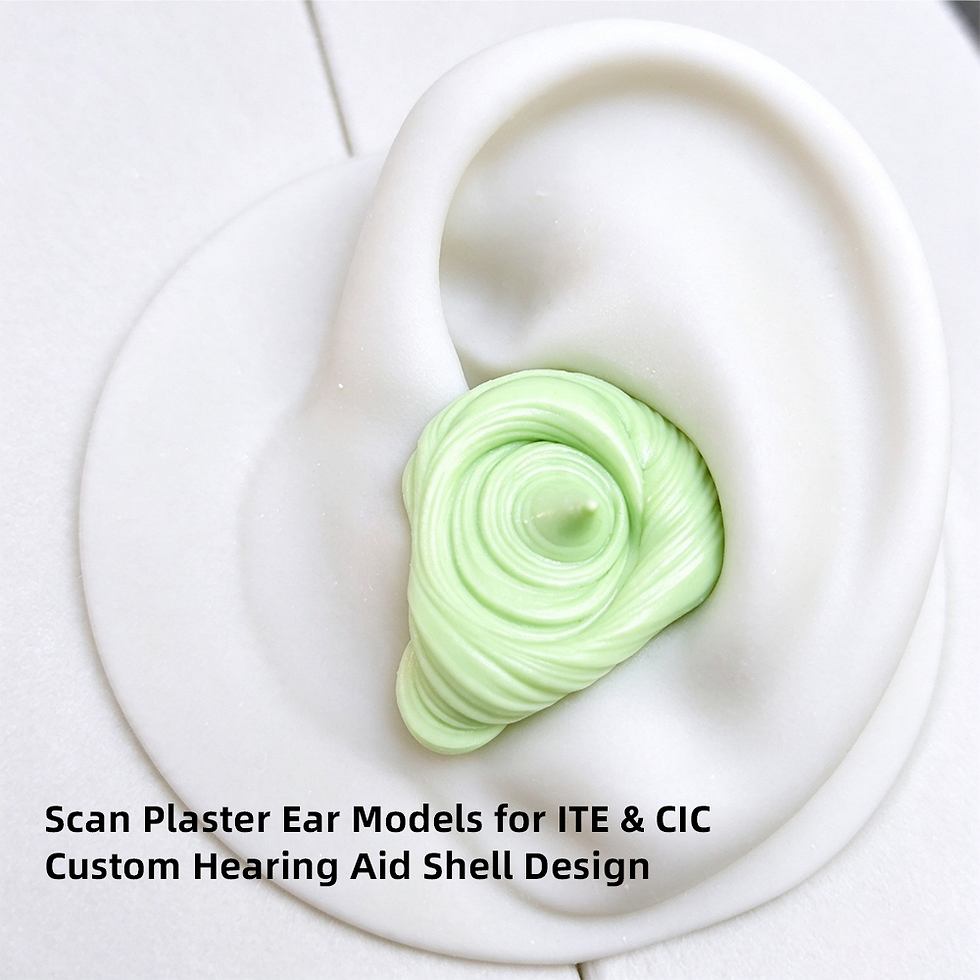
In hearing aid and custom ear device manufacturing, ear impressions are the foundation of accurate fitting. The style and quality of an ear impression directly influence comfort, acoustic performance, device retention, and long-term usability.
For ENT clinics, hospitals, audiology centers, and earmold technicians, understanding different ear impression styles helps reduce remakes, minimize patient discomfort, and improve clinical efficiency.

What Is an Ear Impression Style?
An ear impression style refers to the depth, anatomical coverage, and structural detail captured during the ear impression process.
Different ear impression styles are used for:
Hearing aids (BTE, ITE, CIC, IIC)
Custom in-ear monitors (IEMs)
Hearing protection
Sleep earplugs
Communication earpieces
Selecting the correct ear impression style ensures optimal device stability, acoustic seal, and patient comfort.
Common Ear Impression Styles
1. Full Concha Impression
A Full Concha impression captures the entire concha bowl along with the ear canal.
Complete concha coverage
Strong retention
Suitable for ITE hearing aids and communication devices
Common Challenges:
Pressure discomfort if overfilled
Bulkiness affecting long-term wear comfort
2. Canal Impression
A Canal impression primarily captures the ear canal with minimal concha coverage.
Smaller and less visible
Used for CIC and IIC hearing aids
More discreet design
Common Challenges:
Poor retention if canal depth is insufficient
Acoustic leakage risk
3. Deep Canal Impression
Deep canal impressions extend beyond the second bend of the ear canal.
Benefits:
Improved acoustic seal
Better low-frequency response
Enhanced device stability
Technical Recommendations:
Proper otoblock placement
Controlled material injection
Correct patient jaw positioning (bite block if required)
Common Ear Impression Problems and Solutions

Problem 1: Poor Retention
Causes:
Shallow canal depth
Incomplete concha capture
Solutions:
Extend impression beyond the second bend
Ensure adequate concha coverage
Problem 2: Patient Discomfort
Causes:
Excess impression material
Incorrect canal angle capture
Solutions:
Control material flow
Maintain natural ear canal posture during impression
Problem 3: Acoustic Leakage
Causes:
Short canal impression
Inadequate sealing at second bend
Solutions:
Deeper canal impressions
High-precision silicone impression materials
Best Practices for Ear Impression Technicians
1. Perform Proper Otoscopy
Ensure the ear canal is free of cerumen or obstruction before taking impressions.
2. Use High-Quality Impression Materials
High-quality materials provide:
Better anatomical detail
Minimal shrinkage
Higher production accuracy
3. Maintain Proper Jaw Position
For certain custom devices, using a bite block helps maintain consistent canal shape and improves final fitting accuracy.

Understanding different ear impression styles is critical for successful custom ear device fitting.
For audiologists, ENT clinics, hospitals, and earmold technicians, mastering impression techniques significantly reduces remake rates and enhances patient satisfaction.
By selecting the appropriate ear impression style and following clinical best practices, professionals can deliver more comfortable, precise, and reliable hearing solutions.